Un aislador sísmico no tiene motor, no necesita lubricación y puede pasar décadas sin moverse más que unos milímetros por cambios de temperatura. Por eso es fácil caer en la idea de que “se instala y se olvida”. No es así. El aislador es un elemento estructural que tiene que estar listo para trabajar el día del sismo fuerte, que puede llegar en el año 2 o en el año 40 de la vida del edificio. La forma de garantizarlo es un programa de inspección sencillo, documentado y constante, que incluye no sólo a los aisladores, sino a todo lo que rodea al nivel de aislamiento.
Por qué inspeccionar algo diseñado para durar décadas
Los materiales de un aislador cambian con el tiempo. El hule natural envejece y tiende a endurecerse; el oxígeno, el ozono y la luz atacan su superficie; las placas y los pernos de acero pueden corroerse si hay humedad; en los aisladores de péndulo, el polvo o la contaminación sobre la superficie deslizante alteran la fricción. El diseño moderno ya toma en cuenta estos efectos: ASCE 7-22 obliga a analizar el edificio con propiedades “límite superior” e “inferior” del aislador, y una parte de ese intervalo se debe justamente al envejecimiento y a las condiciones ambientales, mediante los llamados factores de modificación de propiedades (λ) que describen Constantinou y colaboradores (MCEER, 2016).
Pero el análisis supone que el sistema está en las condiciones previstas. Si un aislador tiene una grieta que avanza, un perno suelto o un tubo rígido que lo amarra, el edificio ya no es el que se calculó. Por eso el capítulo 17 de ASCE 7-22 pide que haya acceso para inspeccionar y reemplazar todos los componentes del sistema de aislamiento, y que el ingeniero responsable establezca un programa de monitoreo, inspección y mantenimiento para el edificio.
Tipos de inspección y cada cuándo hacerlas
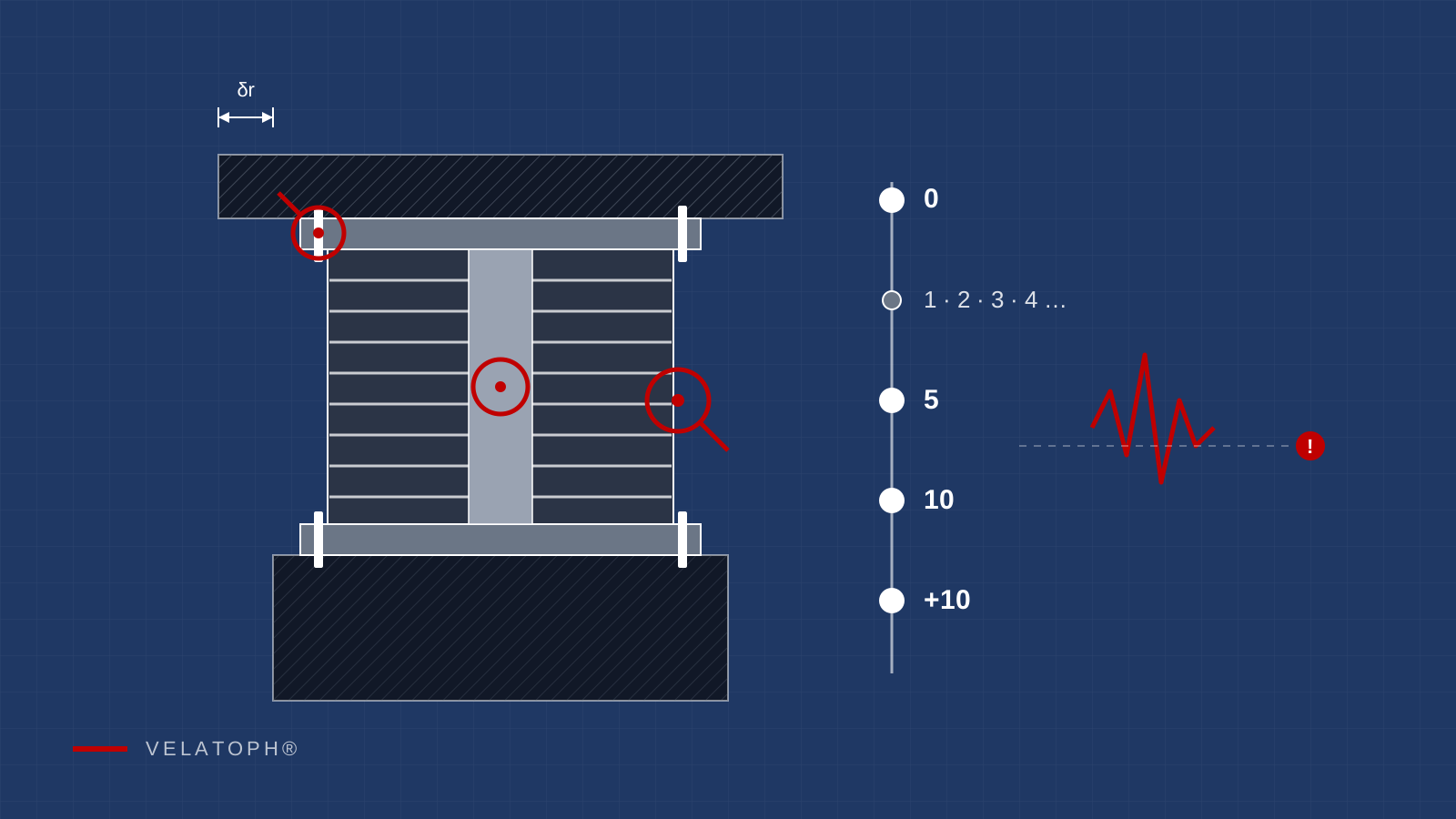
Japón, el país con más edificios aislados, tiene la práctica más detallada. La Sociedad Japonesa de Aislamiento Sísmico (JSSI) publica un estándar de mantenimiento —su edición más reciente salió en 2026— y el Ministerio de Infraestructura (MLIT) lo resume así para los edificios públicos:
| Inspección | Cuándo | Qué incluye |
|---|---|---|
| Periódica anual | Cada año | Recorrido principalmente visual |
| Periódica integral | A los 5 y 10 años de terminada la obra, y luego cada 10 años | Revisión completa con mediciones |
| De emergencia | Inmediatamente después de un sismo, viento fuerte, inundación o incendio que afecte el nivel de aislamiento | Recorrido principalmente visual |
| Detallada | Cuando una de las anteriores detecta una anomalía | Revisión a fondo con mediciones |
En Japón estas inspecciones las hace un técnico certificado específicamente en edificios aislados. En Europa, la norma EN 1337-10 sobre inspección de apoyos estructurales plantea un esquema parecido: una inspección principal dentro del primer año de servicio, repetida después de cualquier sismo que active los aisladores, e inspecciones ordinarias periódicas (del orden de cada 5 años, según el resumen de Todorovski, 2025). Las frecuencias exactas las debe fijar el proyecto, pero el patrón es el mismo en todas partes: una línea base al entregar, revisiones periódicas y una inspección obligada después de cada evento importante.
Qué se revisa
Aisladores elastoméricos (LRB, LDRB)
- Grietas o desprendimientos en la cara del hule y en la cubierta exterior.
- Abultamientos, inclinación o deformación que no regresa (desplazamiento residual).
- Separación entre el hule y las placas de conexión.
- Corrosión en placas, pernos y anclas; pernos flojos.
Aisladores de péndulo (FPS, DFP)
- Superficie deslizante limpia y protegida; estado de sellos y guardapolvos.
- Posición del deslizador respecto al centro (desplazamiento residual).
- Corrosión y apriete de las conexiones.
Disipadores y entorno del nivel de aislamiento
- Disipadores viscosos: fugas de fluido, estado de rótulas y conexiones. Disipadores metálicos: deformaciones permanentes y grietas.
- Foso y junta de separación libres en todo el perímetro (ver nuestro artículo sobre el foso).
- Instalaciones que cruzan la junta con sus tramos flexibles en buen estado.
- Nada almacenado en el nivel de aislamiento y ninguna fuente de fuego cerca de los aisladores.
Lo que enseñó el sismo de Tōhoku 2011
Después del gran sismo del este de Japón, la JSSI revisó el comportamiento de 327 edificios aislados y 130 con sistemas de amortiguamiento. No se encontró ninguna falla estructural. Aun así, alrededor del 15 % de los edificios aislados revisados presentó algún problema en el sistema de aislamiento (Xue, Xie y Tang, 2014). En la zona de Miyagi el desplazamiento máximo registrado en los aisladores fue de 41.5 cm, con un promedio cercano a 20 cm.
El daño más significativo fueron grietas en los amortiguadores de plomo —dispositivos independientes, muy usados en Japón junto a los aisladores— de cinco edificios; en un caso la profundidad de la grieta pasó de 8 mm antes del sismo a 32 mm después. En disipadores de acero se encontraron pernos flojos y deformaciones residuales. Ninguna de estas condiciones se habría detectado sin una inspección posterior al sismo, y la comparación sólo fue posible porque había un registro previo.
Errores comunes durante el uso del edificio
Con los años, los riesgos ya no vienen del diseño, sino de cómo se usa el inmueble. El MLIT japonés advierte sobre varios de ellos:
- Usar el nivel de aislamiento como bodega. Los objetos almacenados pueden estorbar el movimiento durante el sismo.
- Trabajos con fuego cerca de los aisladores. El hule es sensible al fuego; soldar o cortar junto a un aislador sin protección puede dañarlo (ver protección ignífuga).
- Instalaciones y obras nuevas sin consultar a un especialista. Una tubería rígida o una banqueta colada contra el edificio pueden anular la junta.
- Objetos junto al edificio. Autos, macetas o anuncios pegados a la fachada pueden ser golpeados, porque el edificio se mueve mucho durante el sismo.
- Acceso sin control. Sólo personal autorizado debería entrar al nivel de aislamiento.
Vida útil y reemplazo
La norma europea EN 15129 reconoce que la vida útil de un dispositivo antisísmico puede ser menor que la del edificio. Por eso el reemplazo debe resolverse desde el proyecto: conexiones atornilladas en lugar de soldadas, espacio libre para gatos hidráulicos, puntos de apoyo temporal para levantar la losa unos milímetros y planos “como se construyó” que digan qué aislador va en cada posición. Un aislador que no se puede sacar es un aislador que no se puede revisar a fondo.
Lista para el propietario
- Manual de operación y mantenimiento con el programa de inspecciones por escrito.
- Registro inicial de cada aislador (medidas y fotografías) y número de identificación visible.
- Recorrido visual anual y revisión con mediciones según el calendario del proyecto.
- Inspección de emergencia después de cada sismo fuerte, inundación o incendio.
- Toda obra que toque el nivel de aislamiento o la junta, revisada antes por el especialista.
En VELATOPH®
VELATOPH® fabrica en Manzanillo, Colima, aisladores elastoméricos LRB y LDRB, aisladores de péndulo FPS y DFP y disipadores DEF y DVF, y trabaja con la normativa ASCE 7-22 (capítulos 17 y 18), AASHTO LRFD, ISO 22762, NTC-CDMX 2023 y CFE-Sismo 2015.
Si tienes un edificio aislado y quieres armar su programa de inspección, o revisar el estado de sus dispositivos después de un sismo, te ofrecemos una evaluación técnica gratuita. Escríbenos por WhatsApp.
Fuentes
- ASCE/SEI 7-22, Minimum Design Loads and Associated Criteria for Buildings and Other Structures, capítulo 17. asce.org
- MLIT, Oficina Regional de Kinki (2016). Hozen Information Kinki n.º 129: mantenimiento de dispositivos de aislamiento (basado en el estándar de mantenimiento de la JSSI). mlit.go.jp
- JSSI, Comité de Mantenimiento (2026). Estándar de mantenimiento para edificios aislados (en japonés). ndl.go.jp
- Xue, S., Xie, L. y Tang, H. (2014). Lessons Learned from Damage Events of Passive Dampers During the Tohoku-oki Earthquake. 5th Asia-Pacific Workshop on Structural Health Monitoring. tongji.edu.cn
- Constantinou, M. C. et al. (2016). Property Modification Factors for Seismic Isolators: Design Guidance for Buildings. MCEER-15-0005, University at Buffalo. buffalo.edu
- Todorovski, T. (2025). Vita di servizio, ispezioni e costi connessi all'uso di un sistema ad isolatori sismici (EN 1337-10, EN 15129). zedprogetti.it
A seismic isolator has no motor, needs no lubrication and can spend decades moving no more than a few millimeters with temperature changes. That makes it easy to assume it is “install and forget.” It is not. The isolator is a structural element that must be ready to work on the day of the strong earthquake, which may come in year 2 or year 40 of the building's life. The way to guarantee that is a simple, documented and consistent inspection program that covers not only the isolators but everything around the isolation level.
Why inspect something designed to last decades
The materials of an isolator change over time. Natural rubber ages and tends to stiffen; oxygen, ozone and light attack its surface; steel plates and bolts can corrode if there is moisture; in pendulum isolators, dust or contamination on the sliding surface alters friction. Modern design already accounts for these effects: ASCE 7-22 requires the building to be analyzed with “upper bound” and “lower bound” isolator properties, and part of that range is due precisely to aging and environmental conditions, through the property modification factors (λ) described by Constantinou and colleagues (MCEER, 2016).
But the analysis assumes the system is in its intended condition. If an isolator has a growing crack, a loose bolt or a rigid pipe tying it down, the building is no longer the one that was designed. That is why Chapter 17 of ASCE 7-22 requires access for inspection and replacement of all components of the isolation system, and that the responsible engineer establish a monitoring, inspection and maintenance program for the building.
Types of inspection and how often to perform them
Japan, the country with the most isolated buildings, has the most detailed practice. The Japan Society of Seismic Isolation (JSSI) publishes a maintenance standard —its latest edition came out in 2026— and the Ministry of Land, Infrastructure, Transport and Tourism (MLIT) summarizes it as follows for public buildings:
| Inspection | When | What it includes |
|---|---|---|
| Annual periodic | Every year | Mainly visual walkthrough |
| Comprehensive periodic | 5 and 10 years after completion, then every 10 years | Full review including measurements |
| Emergency | Immediately after an earthquake, strong wind, flood or fire affecting the isolation level | Mainly visual walkthrough |
| Detailed | When one of the above finds an anomaly | In-depth review including measurements |
In Japan these inspections are carried out by a technician certified specifically for isolated buildings. In Europe, EN 1337-10 on the inspection of structural bearings sets out a similar scheme: a principal inspection within the first year of service, repeated after any earthquake that activates the isolators, and periodic routine inspections (on the order of every 5 years, according to Todorovski's summary, 2025). The exact intervals must be set by the project, but the pattern is the same everywhere: a baseline at handover, periodic reviews and a mandatory inspection after every significant event.
What is checked
Elastomeric isolators (LRB, LDRB)
- Cracks or detachment on the rubber face and the outer cover.
- Bulging, tilting or deformation that does not recover (residual displacement).
- Separation between the rubber and the connection plates.
- Corrosion of plates, bolts and anchors; loose bolts.
Pendulum isolators (FPS, DFP)
- Clean, protected sliding surface; condition of seals and dust covers.
- Position of the slider relative to the center (residual displacement).
- Corrosion and tightness of the connections.
Dampers and the isolation level surroundings
- Viscous dampers: fluid leaks, condition of clevises and connections. Metallic dampers: permanent deformation and cracks.
- Moat and separation joint clear around the entire perimeter (see our article on the moat).
- Utilities crossing the joint with their flexible segments in good condition.
- Nothing stored in the isolation level and no sources of fire near the isolators.
What the 2011 Tōhoku earthquake taught
After the Great East Japan Earthquake, JSSI reviewed the performance of 327 isolated buildings and 130 buildings with damping systems. No structural failure was found. Even so, about 15% of the isolated buildings reviewed showed some problem in the isolation system (Xue, Xie and Tang, 2014). In the Miyagi area, the maximum recorded isolator displacement was 41.5 cm, with an average of about 20 cm.
The most significant damage was cracking in the lead dampers —stand-alone devices widely used in Japan alongside isolators— of five buildings; in one case the crack depth went from 8 mm before the earthquake to 32 mm after it. Loose bolts and residual deformation were found in steel dampers. None of these conditions would have been detected without a post-earthquake inspection, and the comparison was only possible because there was a prior record.
Common mistakes during the building's use
Over the years, the risks no longer come from the design but from how the building is used. Japan's MLIT warns about several of them:
- Using the isolation level as a storeroom. Stored objects can obstruct movement during the earthquake.
- Hot work near the isolators. Rubber is sensitive to fire; welding or cutting next to an unprotected isolator can damage it (see fire protection).
- New utilities and works without consulting a specialist. A rigid pipe or a sidewalk cast against the building can defeat the joint.
- Objects next to the building. Cars, planters or signs against the façade can be struck, because the building moves a lot during the earthquake.
- Uncontrolled access. Only authorized personnel should enter the isolation level.
Service life and replacement
The European standard EN 15129 recognizes that the service life of an anti-seismic device may be shorter than that of the building. That is why replacement must be solved in the design: bolted rather than welded connections, clearance for hydraulic jacks, temporary support points to lift the slab a few millimeters, and as-built drawings stating which isolator goes in each position. An isolator that cannot be removed is an isolator that cannot be fully inspected.
Owner's checklist
- Operations and maintenance manual with the written inspection program.
- Initial record of each isolator (measurements and photographs) and a visible identification number.
- Annual visual walkthrough and measured review according to the project schedule.
- Emergency inspection after every strong earthquake, flood or fire.
- Any work touching the isolation level or the joint reviewed first by the specialist.
At VELATOPH®
VELATOPH® manufactures in Manzanillo, Colima, LRB and LDRB elastomeric isolators, FPS and DFP pendulum isolators and DEF and DVF dampers, and works with the ASCE 7-22 (Chapters 17 and 18), AASHTO LRFD, ISO 22762, NTC-CDMX 2023 and CFE-Sismo 2015 standards.
If you own an isolated building and want to set up its inspection program, or review the condition of its devices after an earthquake, we offer a free technical assessment. Write to us on WhatsApp.
Sources
- ASCE/SEI 7-22, Minimum Design Loads and Associated Criteria for Buildings and Other Structures, Chapter 17. asce.org
- MLIT, Kinki Regional Bureau (2016). Hozen Information Kinki No. 129: maintenance of isolation devices (based on the JSSI maintenance standard). mlit.go.jp
- JSSI, Maintenance Committee (2026). Maintenance Standard for Seismically Isolated Buildings (in Japanese). ndl.go.jp
- Xue, S., Xie, L. and Tang, H. (2014). Lessons Learned from Damage Events of Passive Dampers During the Tohoku-oki Earthquake. 5th Asia-Pacific Workshop on Structural Health Monitoring. tongji.edu.cn
- Constantinou, M. C. et al. (2016). Property Modification Factors for Seismic Isolators: Design Guidance for Buildings. MCEER-15-0005, University at Buffalo. buffalo.edu
- Todorovski, T. (2025). Vita di servizio, ispezioni e costi connessi all'uso di un sistema ad isolatori sismici (EN 1337-10, EN 15129). zedprogetti.it