Puerto Rico vive sobre una de las fronteras tectónicas más activas del Caribe. La isla se asienta justo en el límite entre la placa del Caribe y la placa Norteamericana, rodeada de fallas activas y de la Fosa de Puerto Rico, una de las zonas oceánicas más profundas del Atlántico. Esa posición la expone a sismos frecuentes y, ocasionalmente, severos.
No es teoría. La secuencia sísmica de 2019–2020 lo dejó dolorosamente claro: una serie de sismos sacudió el suroeste de la isla, con el evento principal del 7 de enero de 2020 en la zona de Guánica–Ponce. Hubo viviendas colapsadas, daños estructurales graves, familias desplazadas y pérdidas materiales cuantiosas. Muchas casas, sencillamente, no estaban preparadas para un sismo fuerte.
Parte del problema es el tipo de construcción dominante. Gran parte de la vivienda en la isla es de hormigón y mampostería, proyectada bajo un criterio de "no colapso": el objetivo del código es que la casa no se derrumbe y permita evacuar, pero acepta que sufra daño estructural importante. Es decir, la casa puede quedar en pie… pero inhabitable. Para una familia, esa diferencia lo es todo.
Qué es el aislamiento sísmico de base
El aislamiento sísmico le da la vuelta a la lógica tradicional. En lugar de reforzar la casa para que resista el sismo, intercepta la energía antes de que suba a la estructura. ¿Cómo? Colocando un nivel de dispositivos flexibles —los aisladores— entre la cimentación y la vivienda.
Al hacerlo, el período natural de la casa se alarga y la estructura queda desacoplada del movimiento del suelo: el terreno se sacude, pero la casa, apoyada sobre los aisladores, se mueve poco y de forma lenta y controlada. La fuerza sísmica que llega a la estructura puede reducirse hasta un 90%.
El sistema LDRB para vivienda
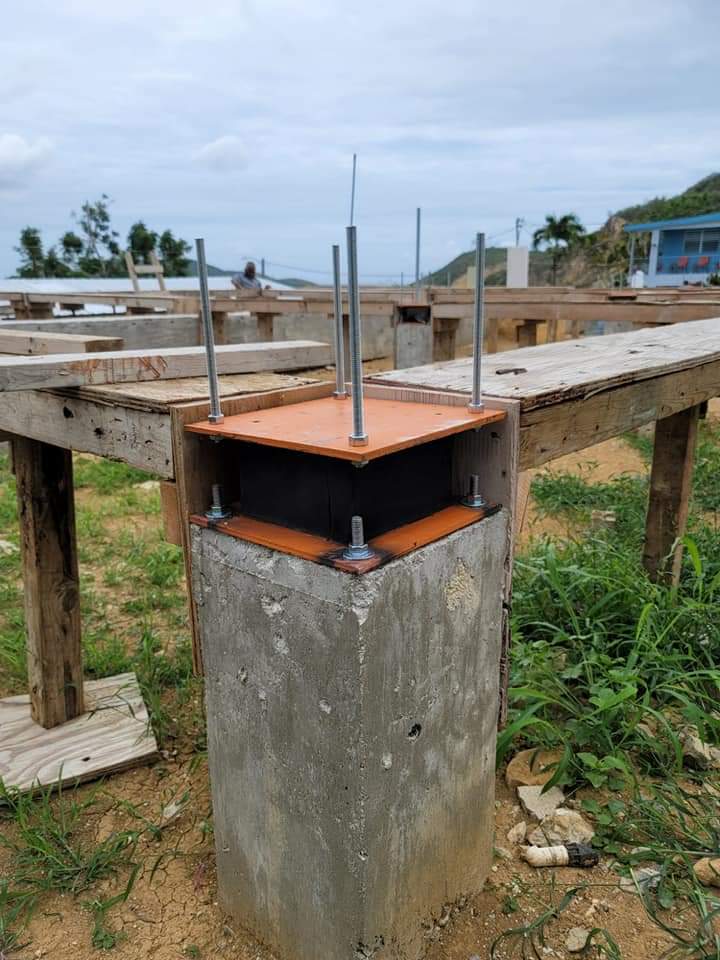
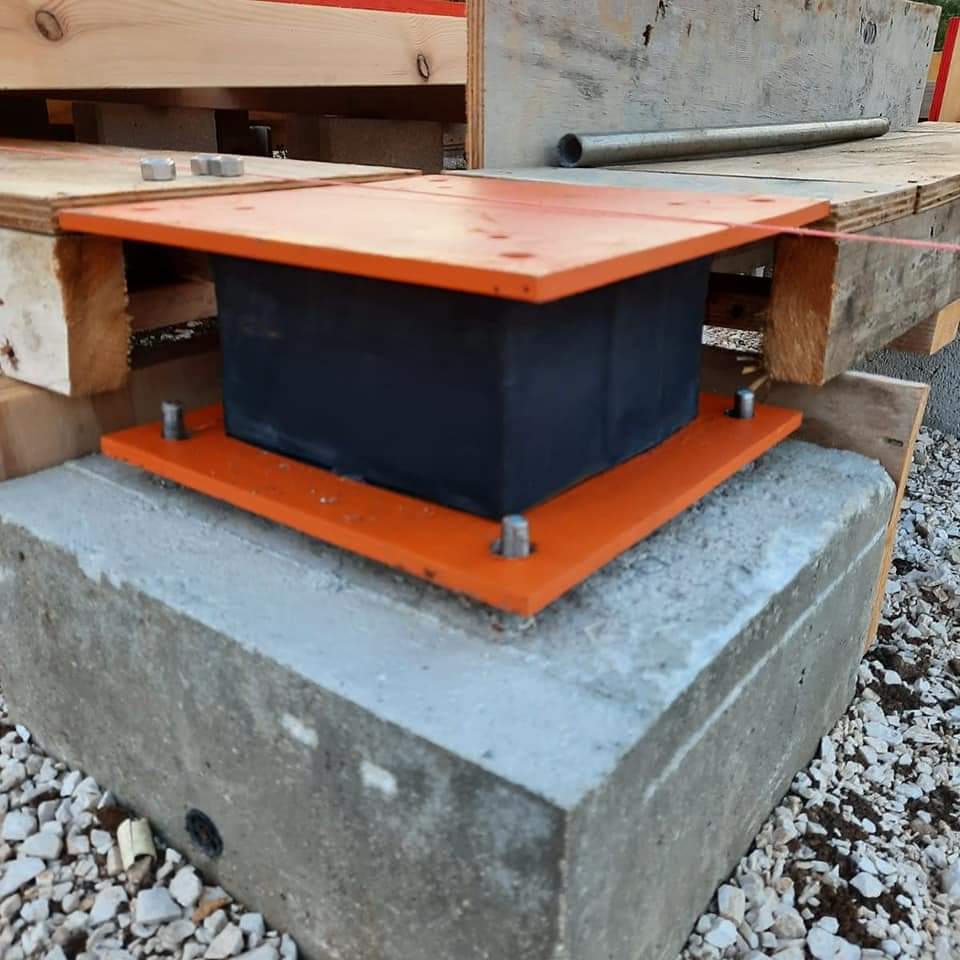
VELATOPH® protege las viviendas con el LDRB, el aislador elastomérico de bajo amortiguamiento (del inglés Low-Damping Rubber Bearing). Está formado por capas de neopreno intercaladas con láminas de acero, con un amortiguamiento del orden de ξ ≈ 15%. A diferencia del LRB que se usa en edificios grandes, el LDRB no lleva núcleo de plomo: es un dispositivo más simple, pensado y optimizado para la escala de una casa. De hecho, es el primer sistema de aislamiento sísmico diseñado específicamente para vivienda.
Su funcionamiento se apoya en una doble cualidad: alta rigidez vertical para soportar con seguridad el peso de la casa, y baja rigidez horizontal para desacoplarla del suelo durante el sismo. Hay dos modelos según el tamaño de la vivienda: el LDRB300, para casas de 1 a 2 niveles, y el LDRB400, para construcciones de hasta 4 niveles.
Nuestra experiencia en Puerto Rico
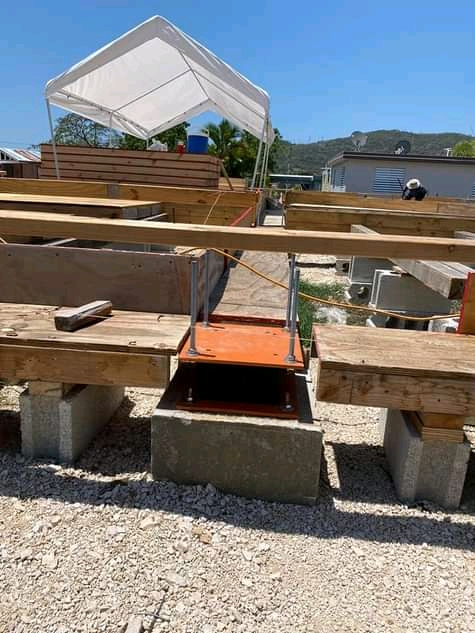
Esto no es un planteamiento de laboratorio. VELATOPH® ha instalado aislamiento sísmico en varias casas habitación en Juana Díaz, Puerto Rico, entre 2020 y 2023, con dispositivos LDRB. Es experiencia real en el contexto sísmico y constructivo de la isla: el mismo tipo de suelo, el mismo clima y las mismas prácticas de construcción con las que tendrá que convivir tu casa.
Ventajas del sistema para una vivienda
- Protege a la familia y mantiene la casa habitable tras un sismo fuerte. No se trata solo de evitar el colapso, sino de poder seguir viviendo en casa después.
- Protege el contenido y los acabados: al reducir las aceleraciones, disminuye el daño a muebles, electrodomésticos, instalaciones y recubrimientos.
- Re-centrado automático: terminado el sismo, la casa vuelve a su posición original.
- Se instala con mano de obra convencional, sin necesidad de equipo especializado ni maquinaria exótica.
- Inversión acotada frente al costo —y el trauma— de reparar o reconstruir.
Qué se construye distinto en una casa aislada
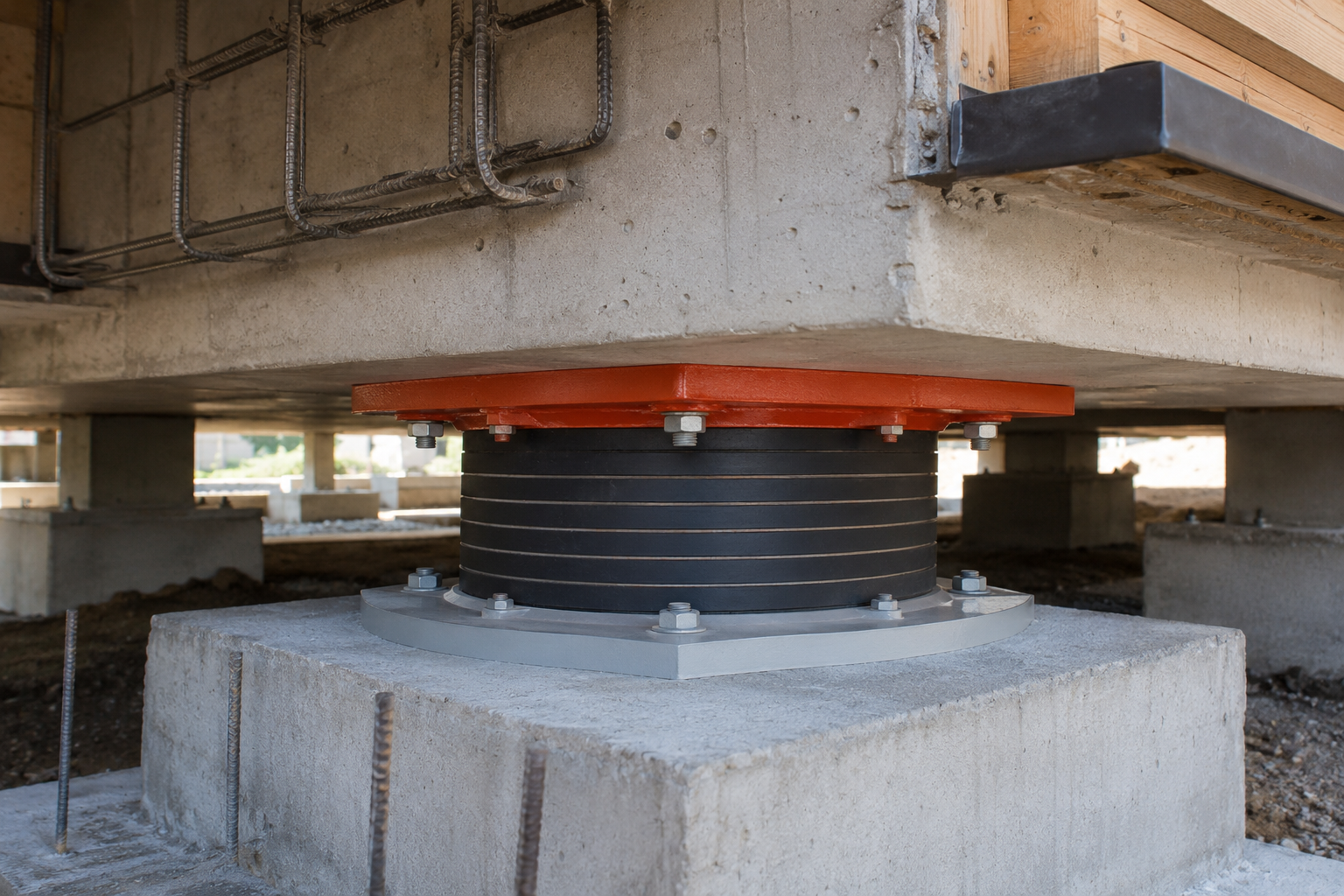
Una vivienda aislada no es una casa convencional con "algo debajo": incorpora elementos estructurales que una casa normal no tiene, y entenderlos ayuda a planear bien la obra:
- Un nivel o plano de aislamiento entre la cimentación y la superestructura, a veces descrito como "cimentación flotante".
- Pedestales o dados de concreto sobre la cimentación, donde se apoya cada aislador.
- Una trabe o viga de rigidez perimetral (un anillo rígido) sobre los aisladores, que distribuye las cargas y hace que toda la planta baja trabaje como un diafragma unido.
- Los aisladores LDRB con sus placas y pernos de anclaje embebidos en el concreto.
- El espacio o brecha de aislamiento (el crawl space o gap) que permite el desplazamiento lateral de la casa durante el sismo; debe quedar libre de obstrucciones rígidas.
- Detalles flexibles para que las instalaciones (agua, drenaje, electricidad) crucen el plano de aislamiento sin romperse cuando la estructura se mueve.
¿Cuánto cuesta?
Seamos claros y honestos con los números. Implementar el sistema de aislamiento en una vivienda representa, de forma estimada, entre el 3% y el 8% del costo total de la construcción (en dólares estadounidenses). El porcentaje exacto depende del tamaño de la casa, el número de niveles, la cantidad de aisladores, el tipo de suelo y la obra civil asociada (pedestales, trabe de rigidez y brecha de aislamiento).
Conviene poner ese gasto en perspectiva: reparar o reconstruir una vivienda dañada por un sismo puede costar una fracción muy superior de su valor —a veces, la casa entera— sin contar el contenido perdido ni el tiempo fuera del hogar mientras se rehabilita. Visto así, el aislamiento es menos un gasto y más un seguro estructural que se paga una sola vez.
Una herramienta, no un sustituto
El aislamiento sísmico reduce drásticamente el daño, pero no sustituye un buen diseño estructural. La superestructura debe cumplir el código de construcción aplicable en Puerto Rico: el LDRB complementa las buenas prácticas de ingeniería, no las reemplaza. Una casa bien diseñada y, además, aislada, es lo mejor de los dos mundos.
El respaldo de VELATOPH®
VELATOPH® es una empresa mexicana fundada en 2010, pionera en desarrollar dispositivos sismorresistentes para vivienda. Cuenta con una planta de 1,000 m² y un laboratorio de ensayo en la Universidad de Colima, donde cada dispositivo se certifica antes de salir a obra. Suma más de 60 proyectos en 5 países —incluido Puerto Rico— y diseña conforme a normas internacionales como ASCE 7 e ISO 22762.
Asesoría en Puerto Rico
¿Vas a construir o quieres proteger tu casa en Puerto Rico? Recibe asesoría personalizada sobre aislamiento sísmico para vivienda.
Ing. Jacqueline Martínez
Contacto generalPuerto Rico sits on one of the most active tectonic boundaries in the Caribbean. The island lies right at the limit between the Caribbean plate and the North American plate, surrounded by active faults and by the Puerto Rico Trench, one of the deepest oceanic zones in the Atlantic. That position exposes it to frequent and, occasionally, severe earthquakes.
This is not theory. The 2019–2020 seismic sequence made it painfully clear: a series of earthquakes shook the southwest of the island, with the main event on January 7, 2020 in the Guánica–Ponce area. There were collapsed homes, severe structural damage, displaced families and substantial material losses. Many houses were simply not prepared for a strong earthquake.
Part of the problem is the dominant type of construction. A large share of the island's housing is built of concrete and masonry, designed under a "no-collapse" criterion: the goal of the code is that the house does not come down and allows evacuation, but it accepts that it will suffer significant structural damage. In other words, the house may remain standing… but uninhabitable. For a family, that difference is everything.
What base seismic isolation is
Seismic isolation turns the traditional logic around. Instead of strengthening the house so it can resist the earthquake, it intercepts the energy before it reaches the structure. How? By placing a level of flexible devices —the isolators— between the foundation and the house.
By doing so, the natural period of the house is lengthened and the structure becomes decoupled from the ground motion: the soil shakes, but the house, resting on the isolators, moves little and in a slow, controlled way. The seismic force reaching the structure can be reduced by up to 90%.
The LDRB system for housing
VELATOPH® protects homes with the LDRB, the low-damping elastomeric isolator (Low-Damping Rubber Bearing). It is made of layers of neoprene interleaved with steel plates, with a damping of around ξ ≈ 15%. Unlike the LRB used in large buildings, the LDRB has no lead core: it is a simpler device, conceived and optimized for the scale of a house. In fact, it is the first seismic isolation system designed specifically for housing.
Its operation relies on a dual quality: high vertical stiffness to safely carry the weight of the house, and low horizontal stiffness to decouple it from the ground during the earthquake. There are two models depending on the size of the home: the LDRB300, for houses of 1 to 2 stories, and the LDRB400, for buildings of up to 4 stories.
Our experience in Puerto Rico
This is not a laboratory exercise. VELATOPH® has installed seismic isolation in several houses in Juana Díaz, Puerto Rico, between 2020 and 2023, with LDRB devices. It is real experience in the seismic and construction context of the island: the same type of soil, the same climate and the same construction practices your house will have to live with.
Advantages of the system for a home
- It protects the family and keeps the house habitable after a strong earthquake. It is not only about avoiding collapse, but about being able to keep living at home afterwards.
- It protects contents and finishes: by reducing accelerations, it lessens damage to furniture, appliances, installations and finishes.
- Automatic re-centering: once the earthquake is over, the house returns to its original position.
- It is installed with conventional labor, with no need for specialized equipment or exotic machinery.
- A bounded investment compared with the cost —and the trauma— of repairing or rebuilding.
What is built differently in an isolated house
An isolated home is not a conventional house with "something underneath": it incorporates structural elements that a normal house does not have, and understanding them helps to plan the works properly:
- An isolation level or plane between the foundation and the superstructure, sometimes described as a "floating foundation".
- Concrete pedestals or blocks on the foundation, where each isolator rests.
- A perimeter stiffening beam (a rigid ring) on top of the isolators, which distributes the loads and makes the whole ground floor work as a unified diaphragm.
- The LDRB isolators with their plates and anchor bolts embedded in the concrete.
- The isolation gap or clearance (the crawl space or gap) that allows the lateral displacement of the house during the earthquake; it must remain free of rigid obstructions.
- Flexible details so that the installations (water, drainage, electricity) cross the isolation plane without breaking when the structure moves.
How much does it cost?
Let's be clear and honest with the numbers. Implementing the isolation system in a home represents, as an estimate, between 3% and 8% of the total construction cost (in US dollars). The exact percentage depends on the size of the house, the number of stories, the number of isolators, the type of soil and the associated civil works (pedestals, stiffening beam and isolation gap).
It is worth putting that expense in perspective: repairing or rebuilding a home damaged by an earthquake can cost a far greater fraction of its value —sometimes the entire house— not counting the contents lost or the time away from home while it is rehabilitated. Seen this way, isolation is less an expense and more a structural insurance paid only once.
A tool, not a substitute
Seismic isolation dramatically reduces damage, but it does not replace good structural design. The superstructure must comply with the building code applicable in Puerto Rico: the LDRB complements good engineering practices, it does not replace them. A well-designed and additionally isolated house is the best of both worlds.
The backing of VELATOPH®
VELATOPH® is a Mexican company founded in 2010, a pioneer in developing earthquake-resistant devices for housing. It has a 1,000 m² plant and a testing laboratory at the Universidad de Colima, where every device is certified before it ships to the construction site. It adds up more than 60 projects in 5 countries —including Puerto Rico— and designs in accordance with international standards such as ASCE 7 and ISO 22762.
Advice in Puerto Rico
Are you going to build or do you want to protect your house in Puerto Rico? Get personalized advice on seismic isolation for housing.
Ing. Jacqueline Martínez
General contact